Paleogene loess emerged before the Eocene–Oligocene transition in the western United States
Xiangwei Guo¹†, Yike Shen¹, Mary Ann M. Moody¹, Steven L. Forman², Dennis O. Terry Jr.³, Ran Feng⁴, Feng Gao⁵, and Majie Fan¹†
¹ Department of Earth and Environmental Sciences, University of Texas at Arlington, Arlington, Texas 76019, USA ² Department of Geosciences, Baylor University, Waco, Texas 76798, USA ³ Department of Earth and Environmental Science, Temple University, Philadelphia, Pennsylvania 19122, USA ⁴ Department of Geosciences, College of Liberal Arts and Sciences, University of Connecticut, Storrs, Connecticut 06269, USA ⁵ Department of Environmental Health Sciences, University of California, Los Angeles, California 90095, USA

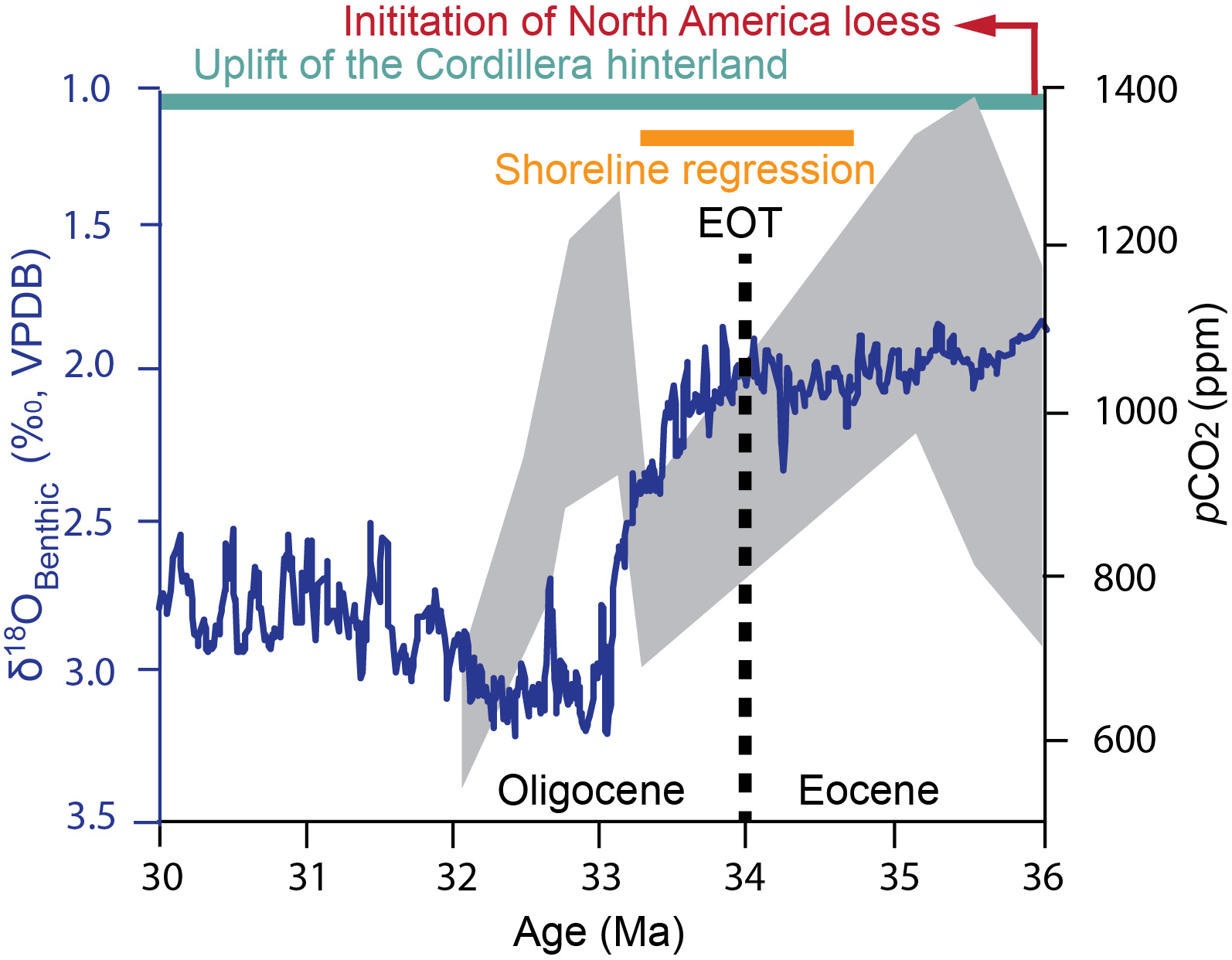
Figure 1
Figure shows δ¹⁸O and pCO₂ trends from 36–30 Ma with a pronounced increase in δ¹⁸O and a sharp decline in pCO₂ across the EOT. The Paleogene loess in the western US initiates before the EOT, Cordilleran uplift spans the EOT, and shoreline regression occurs across the EOT.


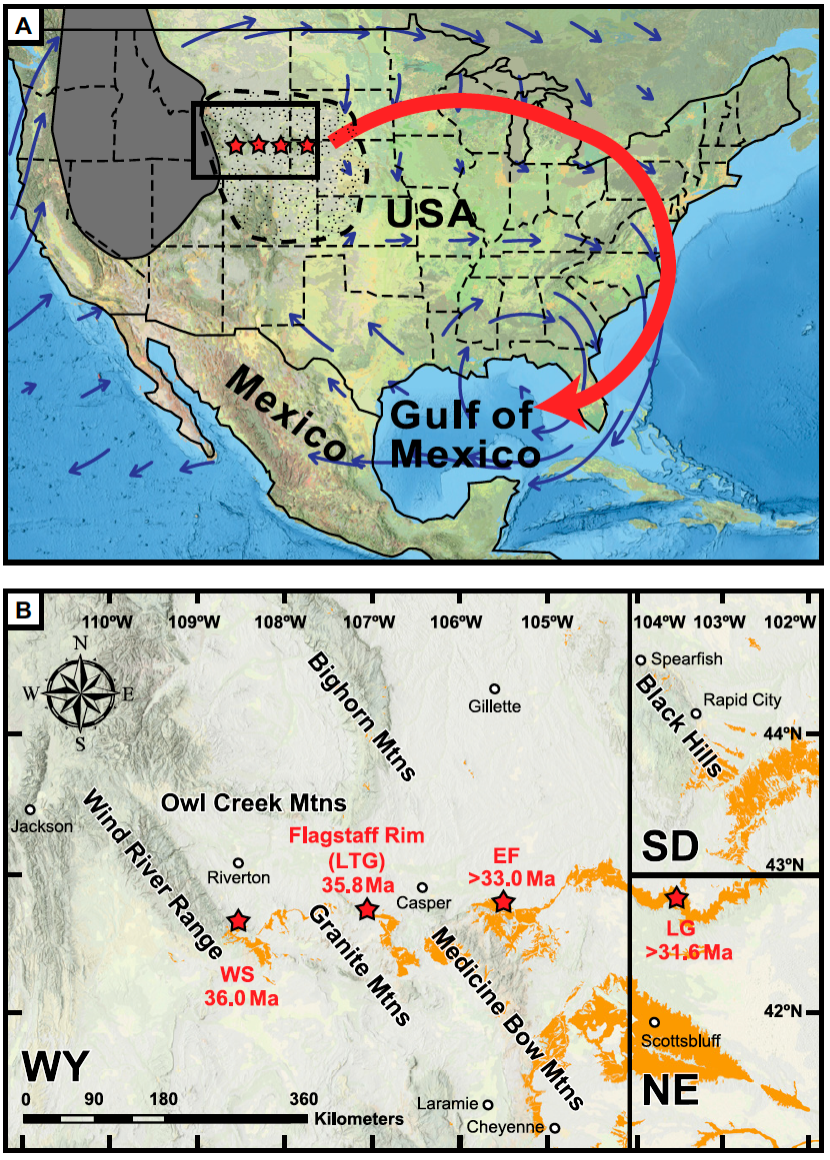
Figure 2
Maps illustrate modeled late Paleogene wind and moisture pathways from Fan et al. (2020) across the western United States. Key sections of the White River Formation and Group, with their depositional ages, show the eastward younging of loess initiation in the western USA.
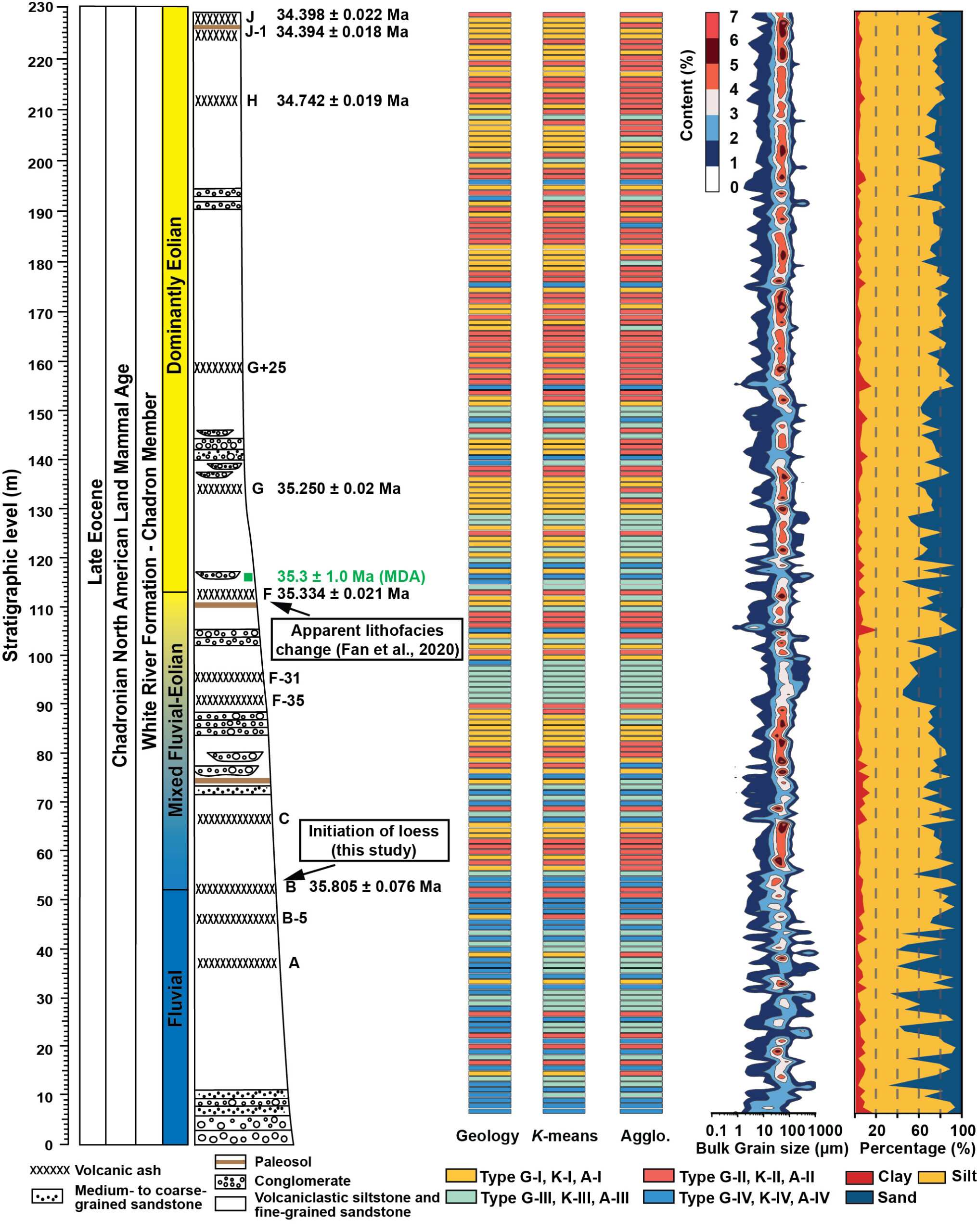
Figure 3
Geologic and unsupervised grain-size classification panels show repeated occurrences of loess grain-size Types I–III near Ash B at Flagstaff Rim, indicating loess initiation at ~36 Ma—earlier than the ~35 Ma onset inferred by Fan et al. (2020).


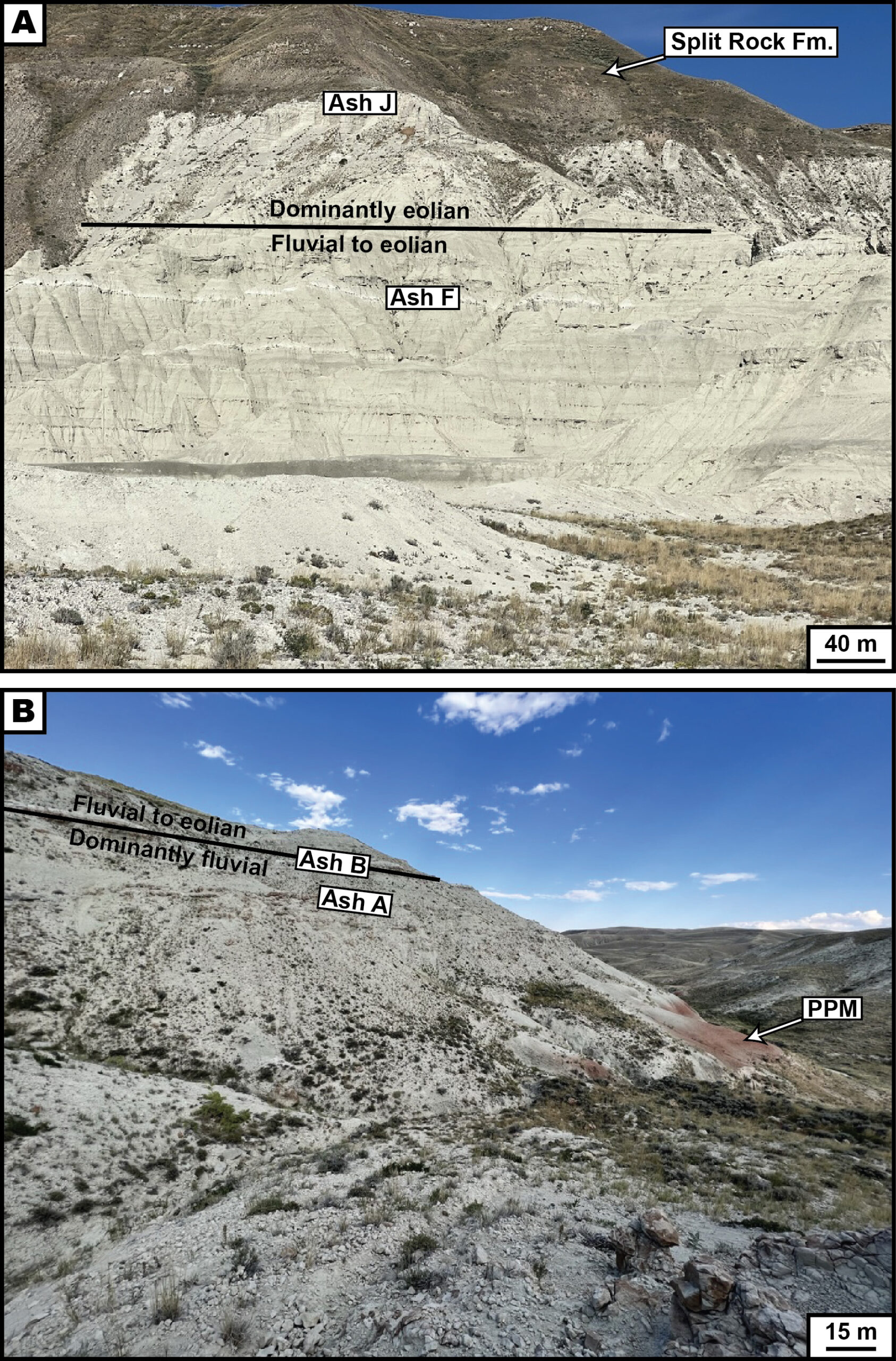
Figure 4
Outcrop photos show fluvial–eolian transitions at Flagstaff Rim with ash beds A, B, F, and J marking key stratigraphic levels.
Figure 5
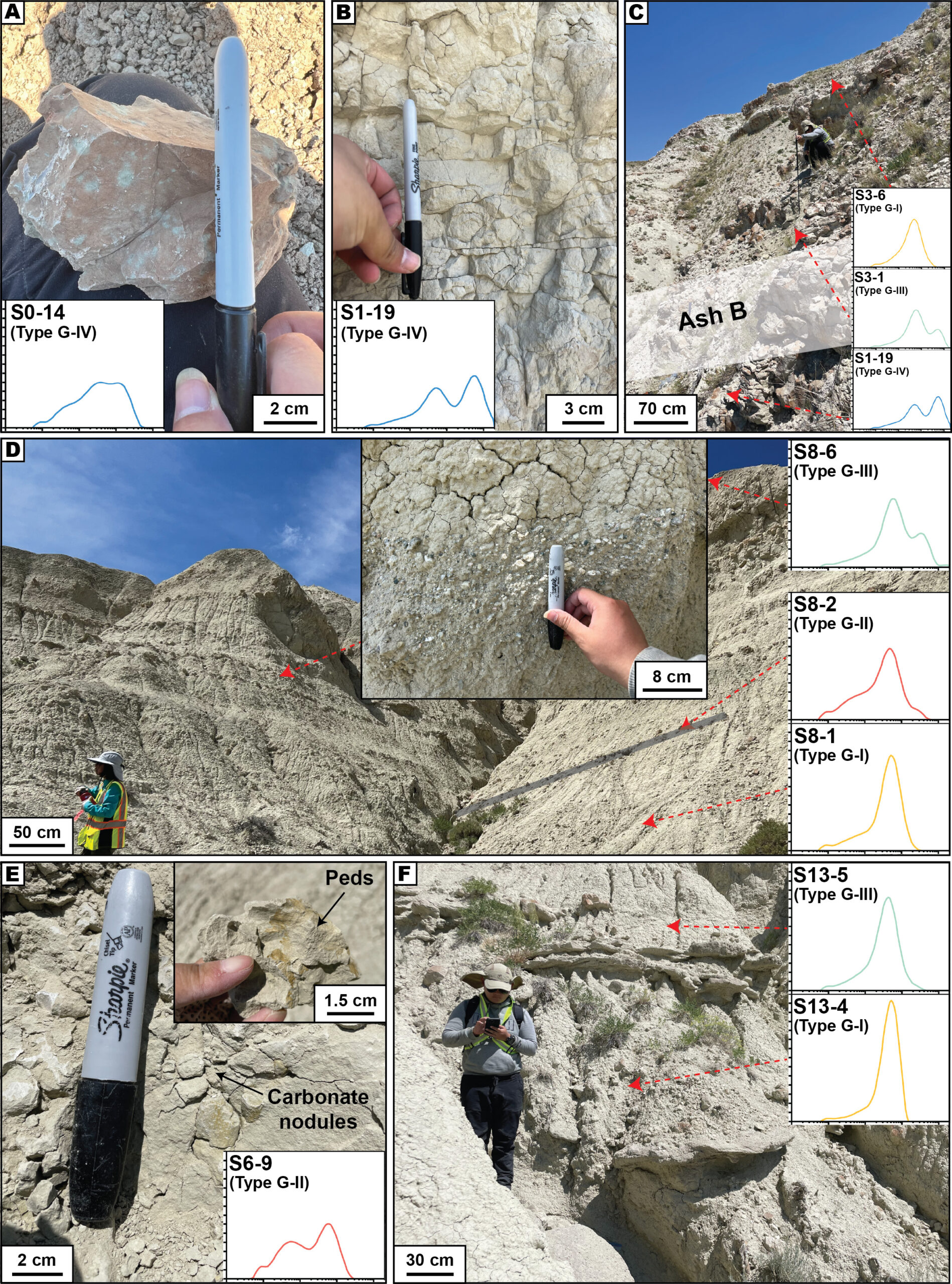
Outcrop photos show Flagstaff Rim samples with grain-size plots linking Types I–II to primary and pedogenic loess with peds and carbonate nodules, Type III to fluvially reworked loess with the presence of coarser grains, and Type IV to pure fluvial facies with poor sorting and erosional features.


Figure 6
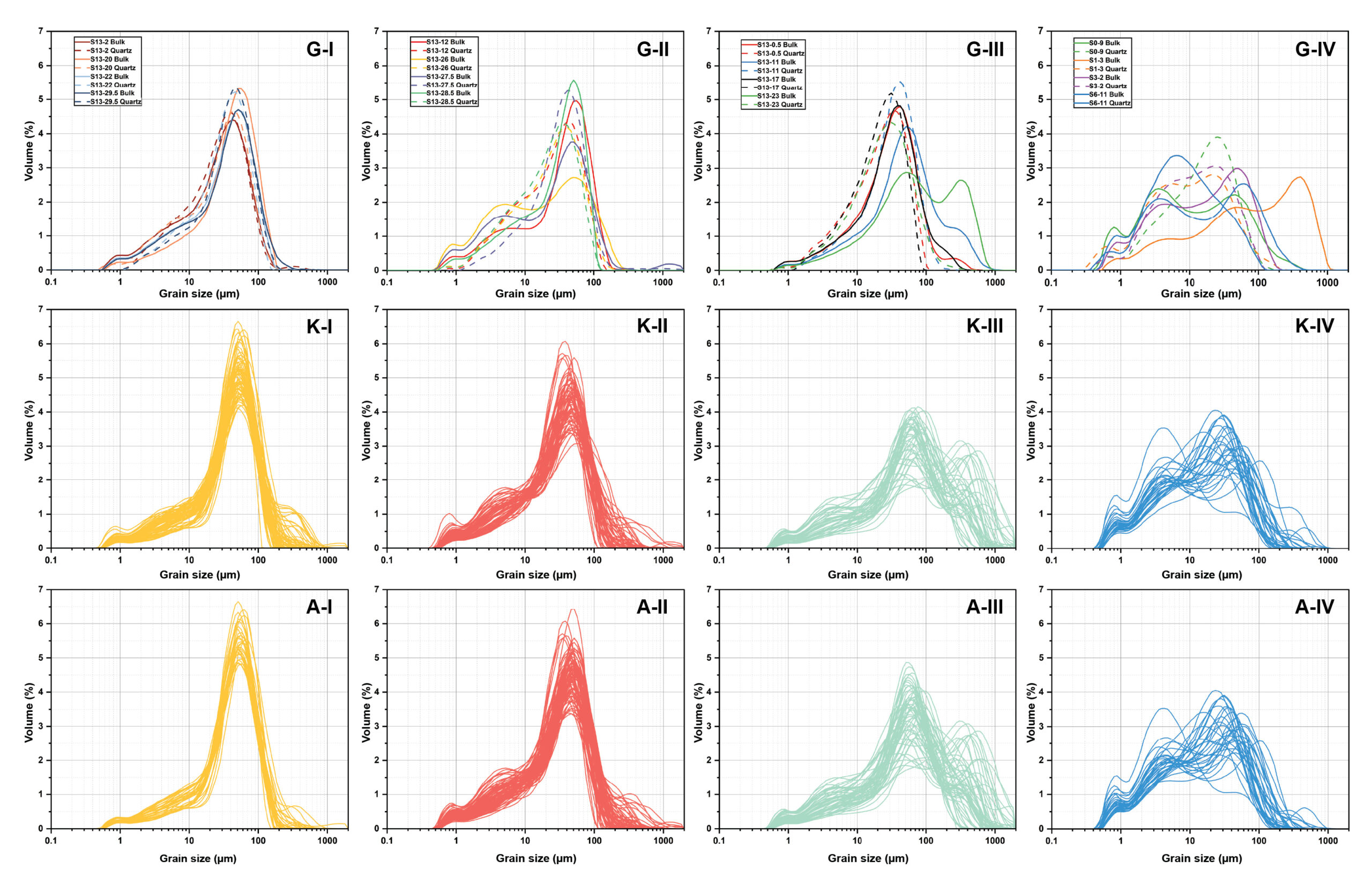
Panels compare grain-size distributions for four geological types with the corresponding K-means and agglomerative clusters. Similar curve shapes across the three classifications show strong agreement in identifying sediment grain-size patterns.
Figure 7
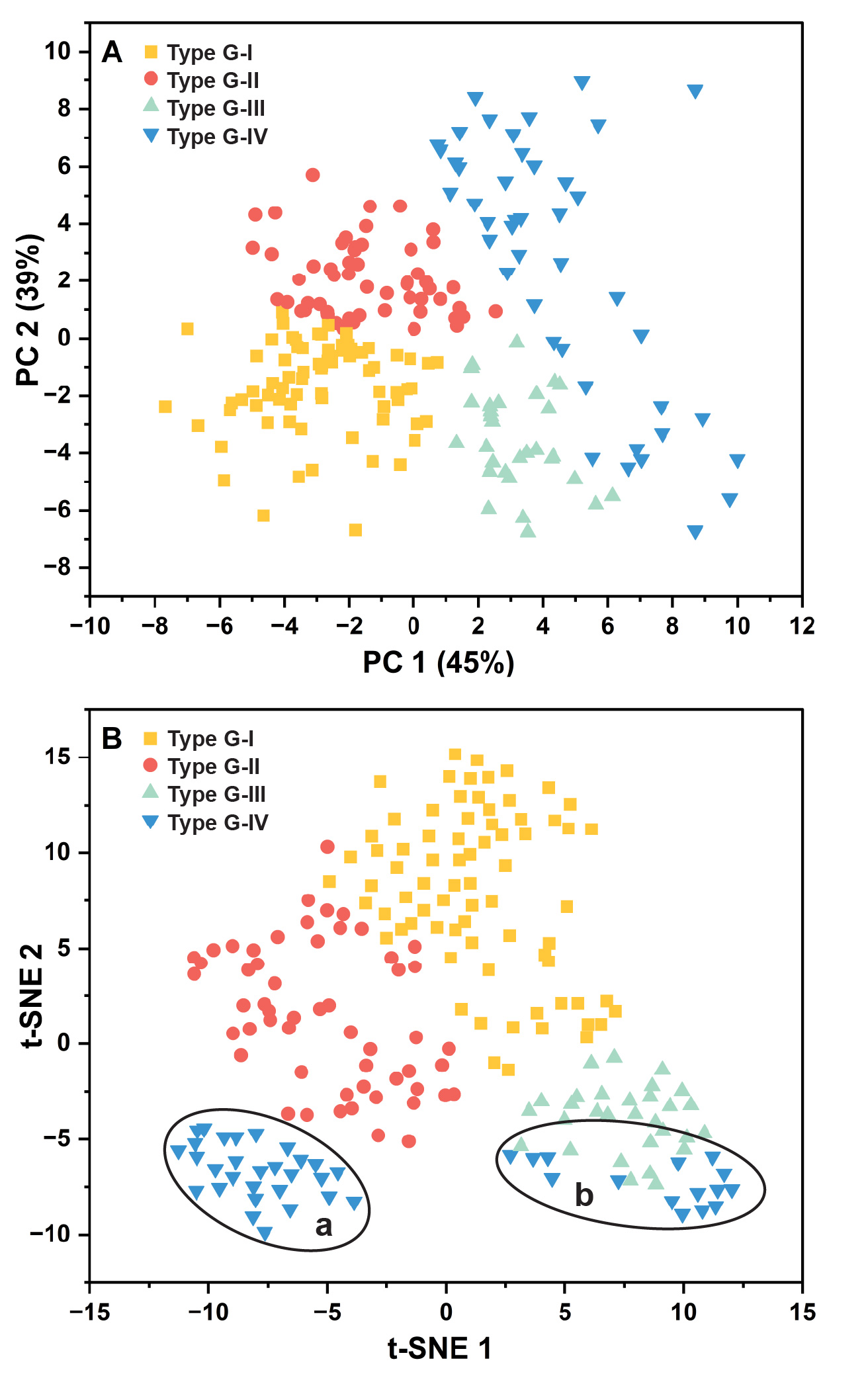
PCA and t-SNE plots show strong separation of geological grain-size Types G-I to G-IV. In the t-SNE plot, Type G-IV further splits into fine and coarse subtypes.


Figure 8
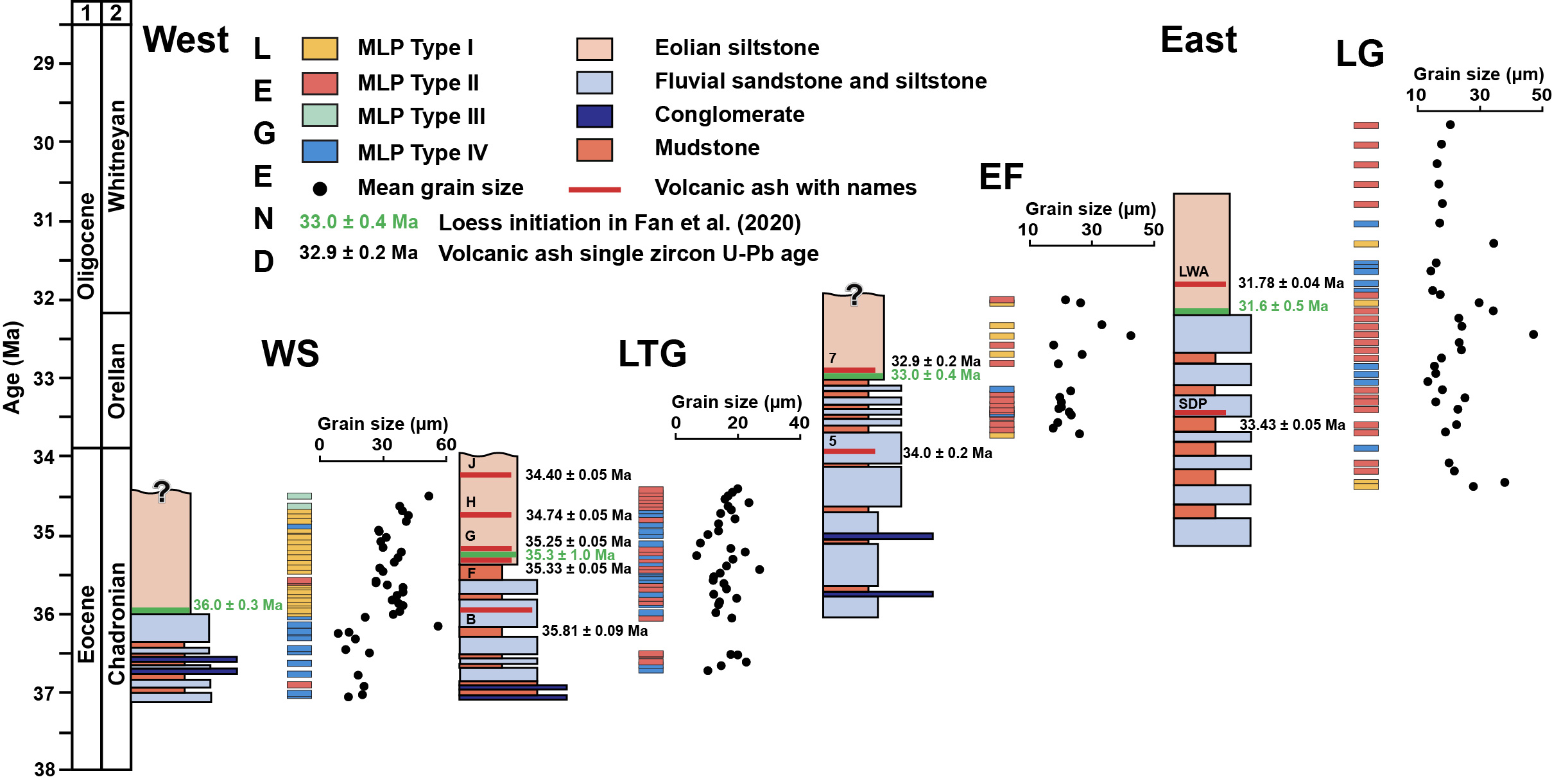
MLP model trained on Flagstaff Rim grain-size data predicts sediment types at WS, LTG, EF, and LG sections in Fan et al. (2020). Model results show that transitions to primary and modified loess at LTG, EF, and LG occur earlier than previously interpreted, with WS aligning closely to published ages.