GEOLOGIST & DATA SCIENTIST
Hello, my name is Xiangwei Guo
This page presents an overview of my doctoral research on the depositional and climatic evolution of late Paleogene fluvial–eolian systems in the western United States. My work integrates field investigations and quantitative analysis to interpret stratigraphic records and reconstruct depositional histories, with the goal of understanding their tectonic and climatic significance during the Eocene–Oligocene Transition.


Project I: Paleogene loess emergence in the western United States
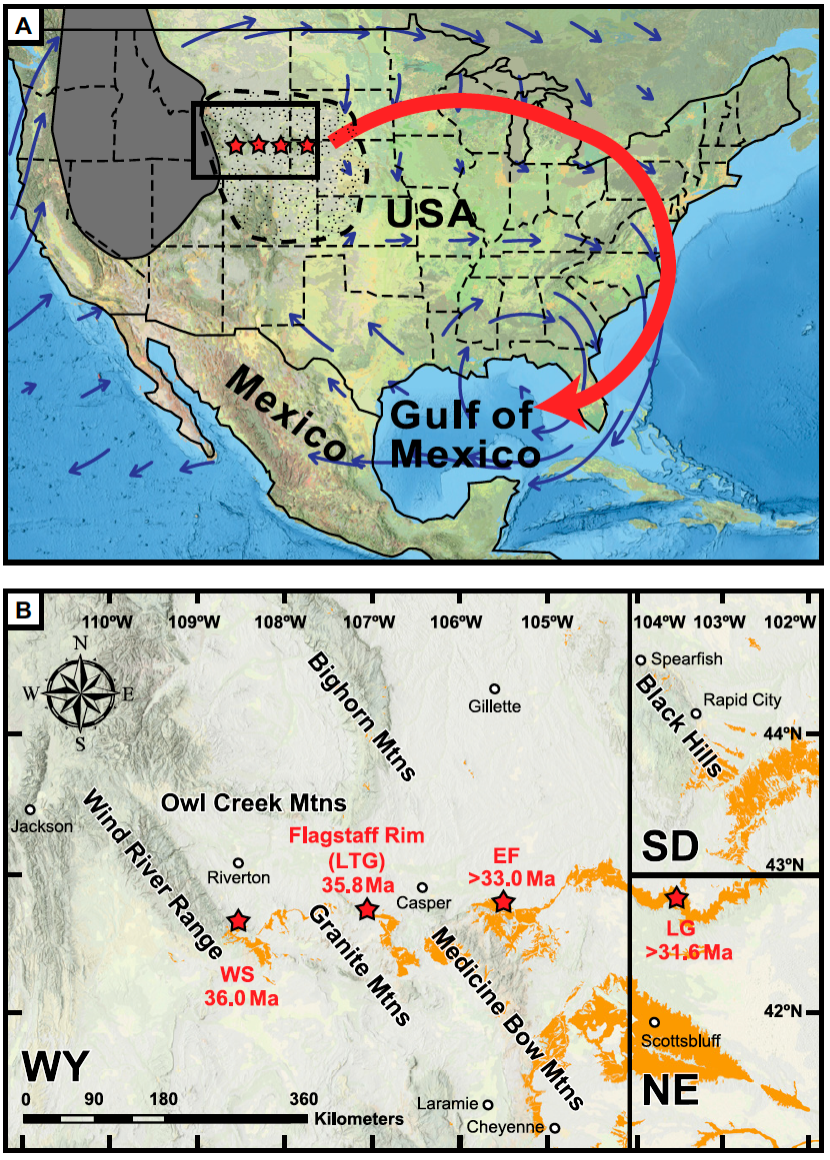
In this project, I investigated the initiation of loess deposition in the western United States during the late Paleogene using field observations, sediment granulometry, and machine learning. The results show that Paleogene loess at Flagstaff Rim was deposited earlier than previously thought and that loess of the White River Formation was already widespread prior to the drastic cooling at the Eocene–Oligocene Transition. This work demonstrates how integrating sedimentology with machine learning refines interpretations of depositional processes. The study is published in GSA Bulletin.
Project II: Orbital Forcing of Paleogene Dust in the western United States
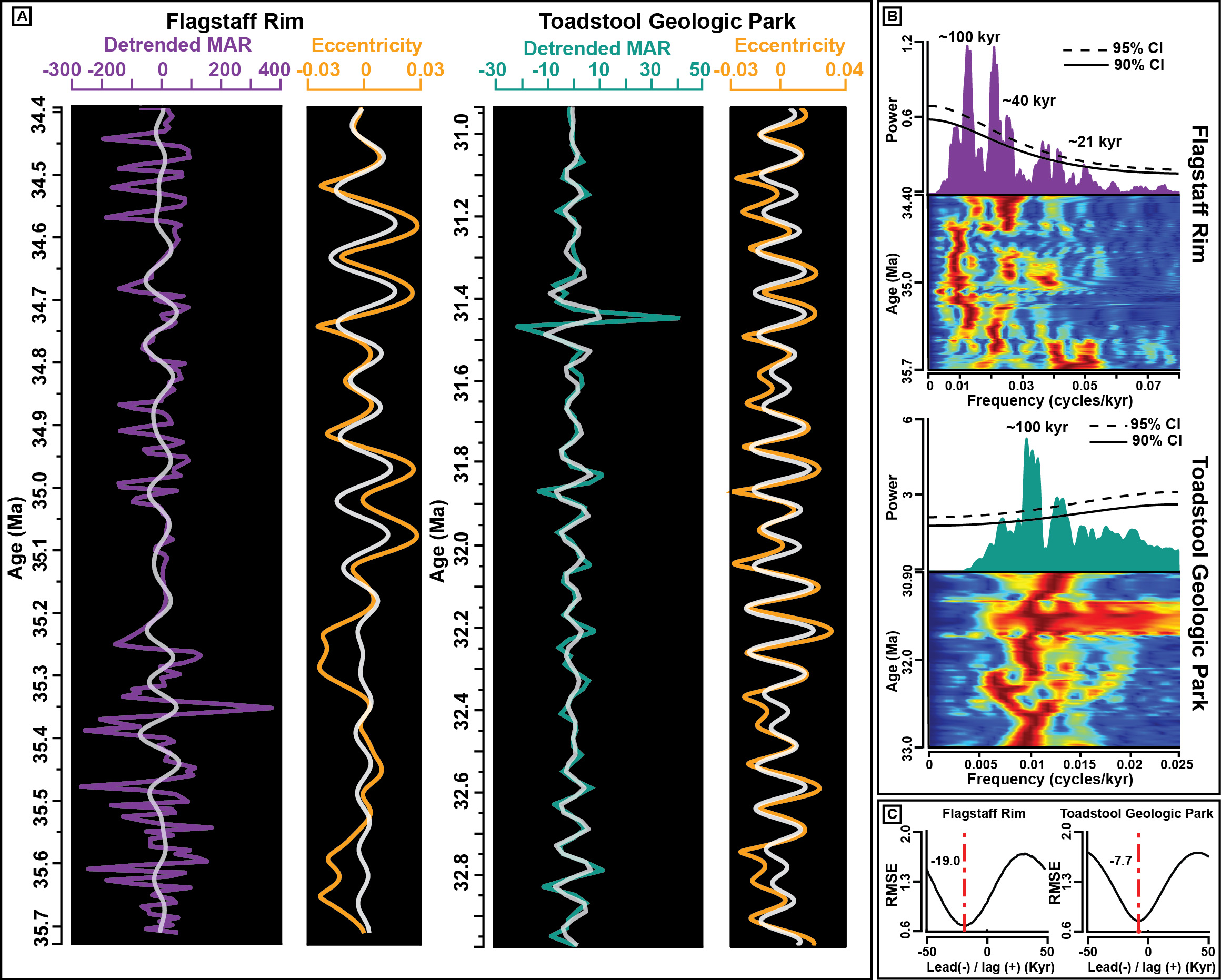
In this project, I investigated orbital controls on dust accumulation in the western United States across the Eocene–Oligocene Transition. Using high-resolution grain-size records from Toadstool Geologic Park, I developed astronomically tuned age models to refine the temporal framework for dust accumulation in the White River Formation. Within this astronomically constrained framework, spectral analysis of dust accumulation rates reveals a dominant ~100-kyr eccentricity pacing of loess deposition, providing evidence for orbital-scale climate control on late Paleogene environments. The manuscript is currently published in Global and Planetary Change.
Project III: Sediment Recycling in Late Paleogene Fluvial–Eolian Systems
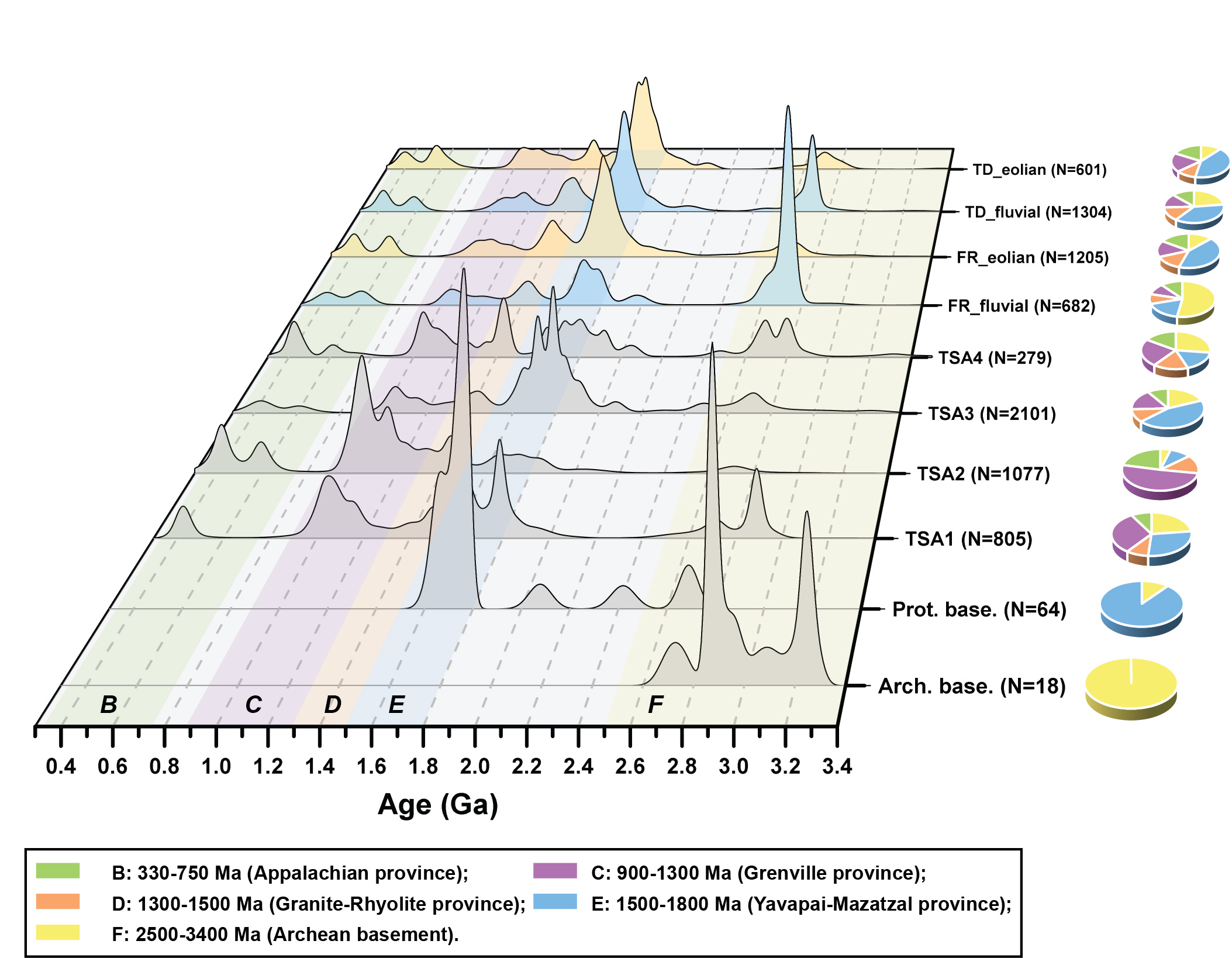
In this project, I investigated sediment recycling in late Paleogene fluvial–eolian systems of the western United States. Using detrital zircon U–Pb geochronology across three grain-size fractions, together with zircon morphology, heavy mineral analysis, and bulk mineralogical and geochemical analyses, I evaluated volcaniclastic contributions, provenance, and sediment recycling within the White River fluvial–eolian system. This work developed a coupled fluvial–eolian recycling model that provides new insights into sediment transport pathways and landscape evolution. The manuscript is currently in preparation for submission to Geoscience Frontiers.